
Viracon Helps Birds See Buildings – and Preserve Design Intent
Data center construction is not fading. It is maturing.
That is the most important takeaway right now.
Even with growing scrutiny around power, water, environmental impact, and community acceptance, the broader data center construction cycle still looks robust. Demand tied to AI, cloud infrastructure, storage, and digital services remains substantial. Nationally, the project pipeline is still moving at a remarkable pace, and developers, capital providers, utilities, and end users continue treating digital infrastructure as a long-duration priority rather than a short-term theme.
What is changing is not whether data centers get built. It is how they get approved, how they get designed, and how carefully they need to be delivered.
That distinction matters, especially in New York.
Data center construction still looks strong
There is a temptation to read every cautionary headline as a sign the data center cycle is peaking. We do not think that is the right conclusion.
Yes, there are growing questions about overspending, speculative development, and whether every announced campus will move forward at full scale. But those concerns should not be confused with a collapse in demand. The larger trend still points toward a durable build cycle supported by real digital infrastructure needs.
In our view, the better way to frame it is this: data center construction is likely to remain robust, but capital and approvals are becoming more selective.
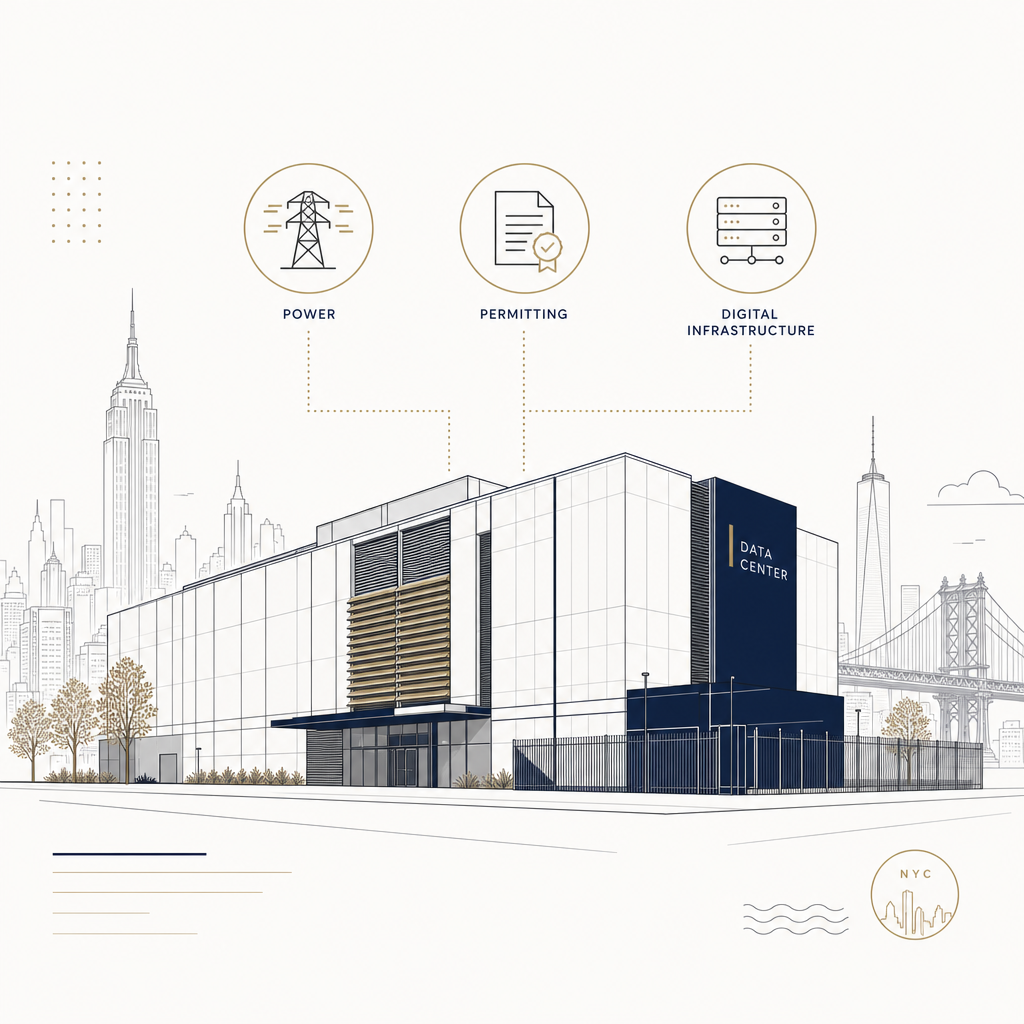
That means the strongest projects should still move. The difference is that the market is asking harder questions about power, permitting, timing, community fit, and execution certainty.
New York just raised the bar
New York’s recent action on hyperscale data centers is one of the clearest signs that the next phase of data center growth will be shaped as much by regulation and local acceptance as by technology demand.
The state has paused new hyperscale data center permits while it works through a broader framework around grid impact, environmental review, water use, and community benefits. That does not mean data center development is going away. It does mean future projects will need to meet a higher standard.
For owners, developers, design teams, and supply-chain partners, that has several implications:
- permitting risk needs to be evaluated earlier
- power and infrastructure assumptions need to be more realistic
- environmental and community concerns need to be addressed more directly
- project teams will need stronger execution discipline from design through delivery
In short, New York is making it harder for data center projects to succeed on scale alone.
Thoughtful design is becoming part of the approval strategy
This is where the conversation gets more interesting.
One of the most credible outside observations we have seen on this topic came from Gensler’s recent LinkedIn post highlighting how data centers are evolving from plain concrete infrastructure into more thoughtfully designed facilities that better respond to community input and communicate value beyond the technology inside.
We think that is directionally right.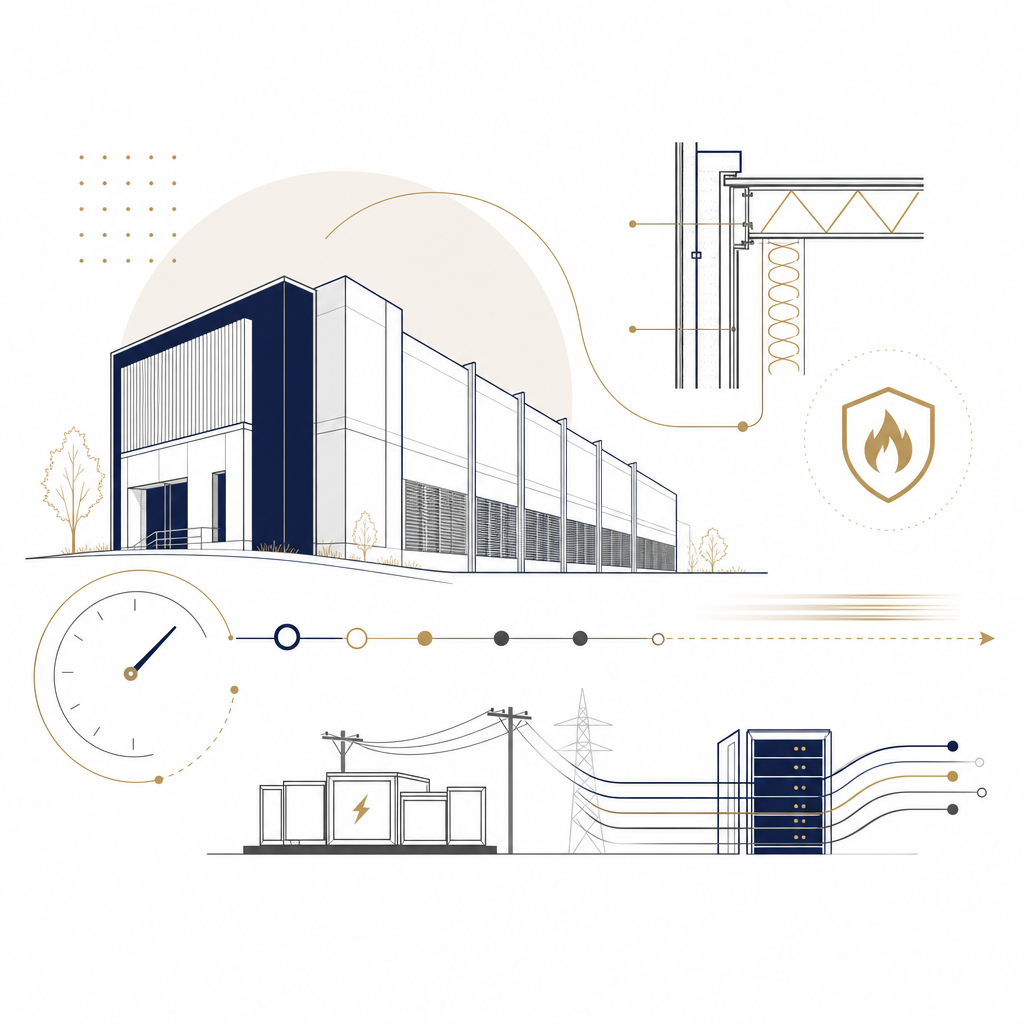
In the next phase of this market, thoughtful design is not just about aesthetics. It is about reducing friction.
It helps answer real questions from communities, regulators, and project stakeholders:
- How does this project fit its surroundings?
- How does it handle visibility and public perception?
- How does it address environmental concerns?
- How does it communicate long-term value rather than just technical necessity?
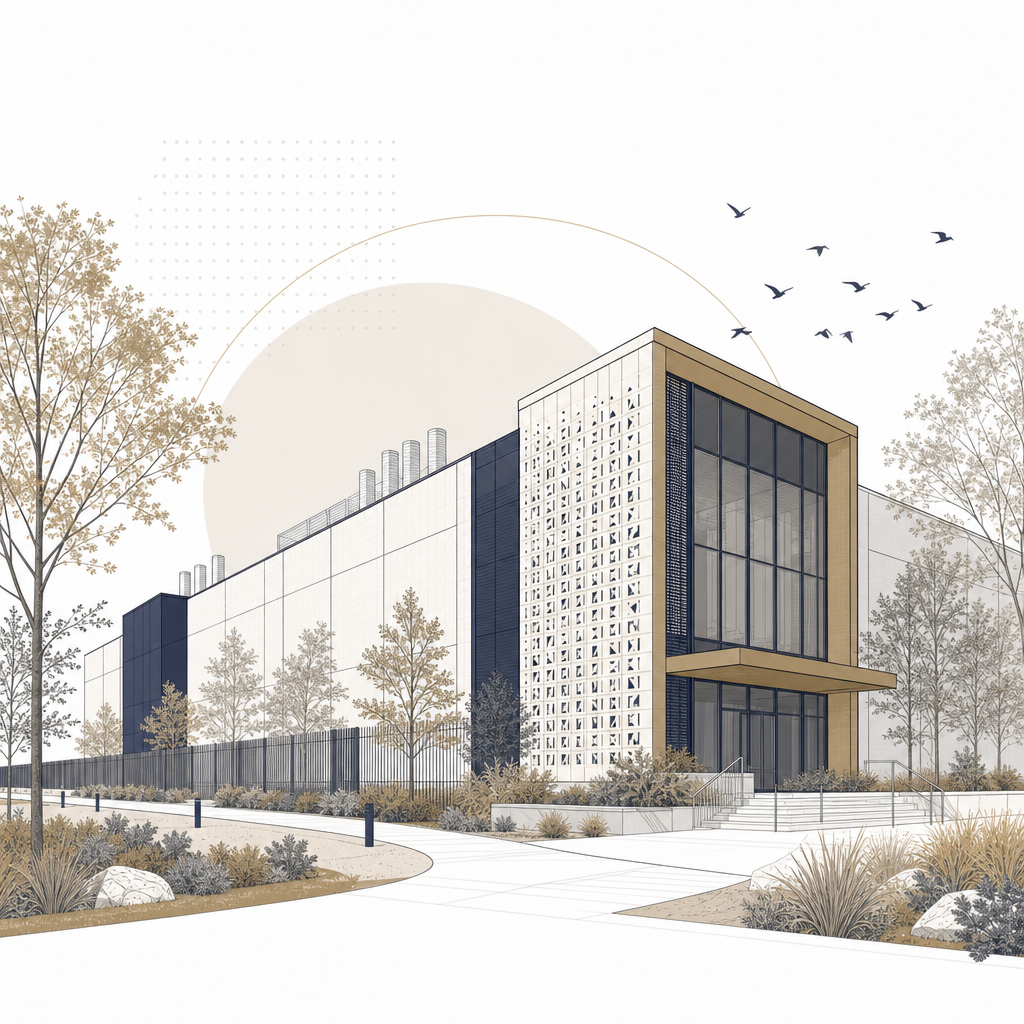
For data centers, that means design quality, material choices, façade strategy, and specification discipline may all play a bigger role in project acceptance than they did in earlier generations of purely utilitarian facilities.
Performance still matters just as much as appearance
None of that means performance becomes secondary. If anything, the opposite is true.
The best data center projects will need to combine thoughtful design with real technical credibility. Over the past week, we have had multiple conversations that reinforce the same point: teams are not only focused on the computing mission. They are also focused on how the facility performs, how quickly it can be delivered, and how reliably the supply chain can support it.
The practical issues remain critical:
- strong envelope and glazing performance
- thoughtful aesthetics and better community fit
- bird-friendly strategies where appropriate
- fire-rated safety and code alignment
- speed to market
- on-time and complete delivery
- reliable lead times
 That is the real balancing act in this segment.
Owners and design teams do not want a project that looks better but slows down. They want a project that supports performance, resilience, code alignment, community acceptance, and execution certainty at the same time.
Why execution will separate the winners from the noise
This is also where some of the macro caution around data centers needs to be interpreted carefully.
There is a legitimate debate about whether AI infrastructure spending can get overdone. Some projects will likely be delayed, resized, rephased, or never fully built. That is normal in a major construction cycle.
But the more immediate reality is not that the sector is disappearing. It is that execution quality is becoming more important.
The projects most likely to move forward are the ones that can demonstrate:
- credible power strategy
- realistic schedules
- durable funding
- strong design coordination
- clear permitting paths
- dependable material and system partners
That is why we continue to believe data center construction will remain robust overall, even as the market becomes more selective around which projects earn approval and capital.
Where Martineau & Co can help
At Martineau & Co, we see a practical role in this shift.
Through our manufacturer partners, we can help project teams think through the parts of data center design and delivery that increasingly matter in this environment: performance expectations, façade and glazing considerations, fire-rated safety systems, specification clarity, and practical execution paths that support speed to market and more reliable delivery.
In a market like New York, where the approval and delivery bar is rising, those details are not peripheral. They are part of the risk strategy.
Our takeaway
Data center construction still looks strong.
The demand side remains substantial, and the broader build cycle should continue to be one of the most important construction themes in the market.
But the next wave of winning projects will not be defined by ambition alone. They will be defined by how well they handle power, permitting, design, community fit, safety, and execution.
That is why thoughtful design matters.
And that is why data center construction can remain robust even as the standard for getting built gets higher.