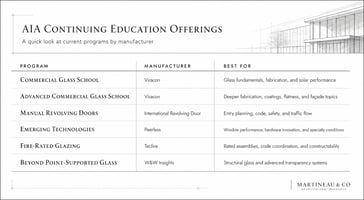
For many architecture teams, continuing education is most valuable when it is directly connected to...
For New York City architects and consultants, entrance design is rarely a minor detail. In many projects, it sits at the intersection of code, public safety, pedestrian flow, energy performance, and the daily user experience.
That is one reason Martineau & Co is including Manual Revolving Doors in our current AIA presentation campaign. For teams working on commercial office, hospitality, institutional, healthcare, and mixed-use projects in New York City, it is a practical topic with direct design implications.
 Why this topic matters in New York City
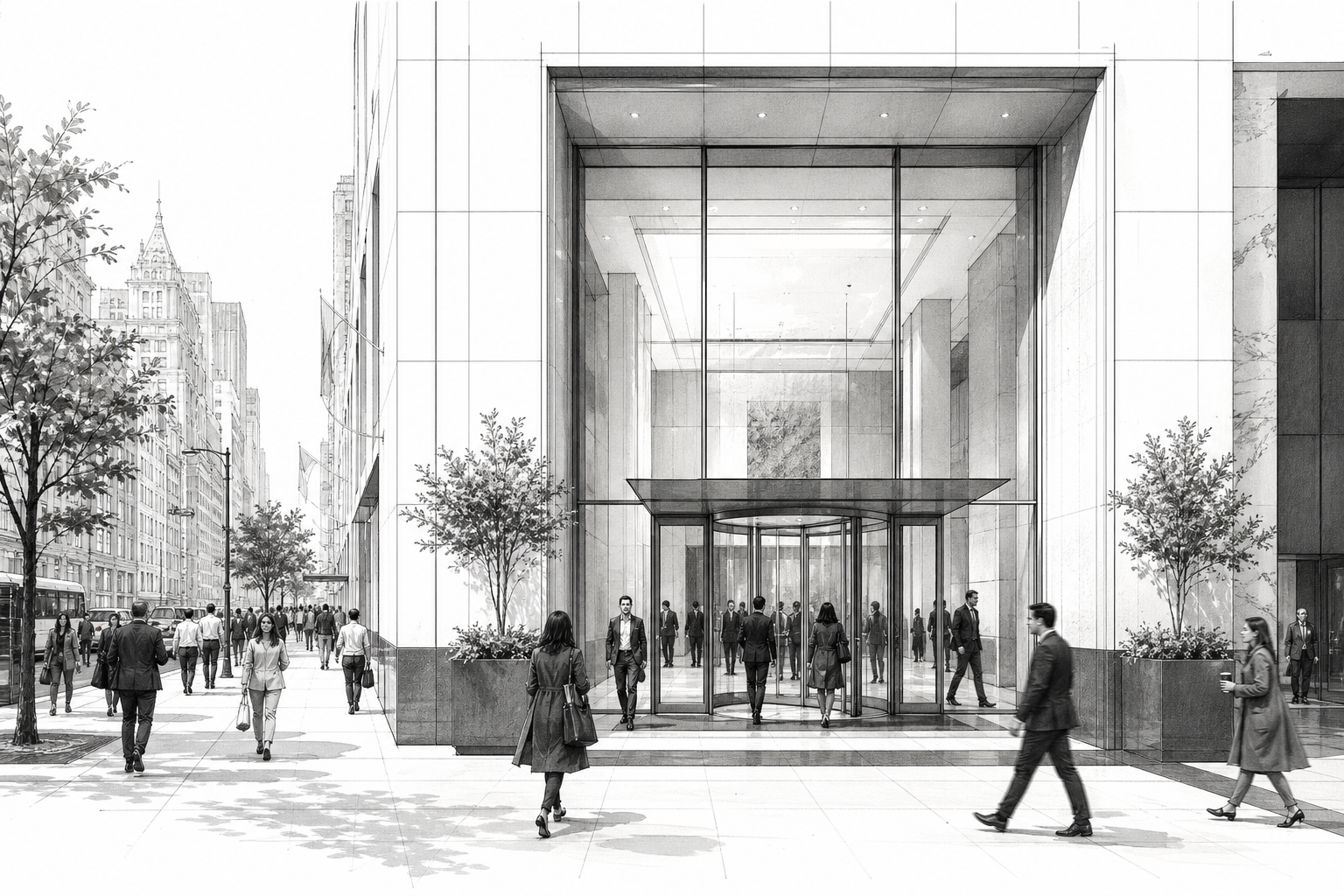
In New York, entrances often need to do more than provide access. They may need to help manage heavy foot traffic, support building operations in dense urban conditions, contribute to energy performance, and align with demanding aesthetic expectations.
Manual revolving doors can play an important role in that equation when they are understood and specified well. But like many entrance systems, they are easiest to evaluate early, before important decisions around vestibules, canopies, circulation, and code compliance are already fixed.
That is where this course is designed to help. It gives architects, designers, and construction professionals a clear introduction to the fundamentals of manual revolving doors, with emphasis on safety standards, performance specifications, and architectural integration. Because the program is sponsored by International Revolving Door, that discussion is also informed by hands-on product knowledge and the practical realities of how these systems are planned, detailed, and coordinated.
A practical AIA session, not a product pitch
This beginner-level, AIA-approved program is designed as an in-person educational session for project teams that want a stronger foundation in how manual revolving doors work and how they should be evaluated.
The course focuses on the ANSI/BHMA A156.27 requirements that shape safe and compliant design. It also walks through the core issues that influence system selection and specification, including:
- door mass
- acceptable operating speeds
- enclosure guidelines
- breakout force requirements
- system components and door assemblies
- speed control considerations by canopy type
- basic 3-part specification planning
For many teams, that kind of focused review is valuable because entrance systems can appear straightforward until project-specific conditions begin to narrow the options.
More relevant than many teams expect
This course is especially useful for teams working on buildings where entry conditions affect both performance and public use. In New York City, that can include office buildings, hotels, healthcare facilities, multifamily developments, academic projects, and civic or cultural work.
It is also relevant for teams trying to balance design intent with practical concerns around code, durability, operations, and occupant experience.
The course also highlights a point that deserves more attention in early design: revolving doors are not only a circulation and entrance-planning topic. They can also support energy efficiency and health, safety, and welfare goals when integrated thoughtfully into the building design.
Why MCO is highlighting this program
At Martineau & Co, we want our AIA campaign to reflect the kind of support architects and consultants actually value: useful education, practical guidance, and access to strong technical resources. That includes programs that help teams make better early decisions, not just learn about products in isolation.
This course fits that approach well. It gives New York City teams a chance to step back and review a system that often carries more technical and operational importance than it first appears to. The fact that International Revolving Door sponsors the program makes that review more useful, not more promotional. It helps ensure that the discussion is backed by real-world system knowledge that can support stronger entrance planning and clearer specification thinking.
It also fits how we support the market more broadly. Alongside our manufacturer partners, we help teams work through real project questions through AIA lunch and learns, specification reviews, deeper technical discussions, mock-ups, and other practical coordination support .
 A good fit for NYC firms working on active projects
For firms with live work in New York City, this session can be especially timely when a team is:
- planning a public-facing entry sequence
- reviewing vestibule or canopy conditions
- evaluating circulation and user flow
- coordinating entrance design with life safety and performance goals
- preparing specifications for a project with higher public use expectations
Because the course is introductory, it also works well for mixed office audiences. Project architects, designers, specifiers, and consultants can all come away with a stronger common baseline for discussing how manual revolving doors should be approached.
Looking ahead
If your team is working on New York City projects where entrance performance, code compliance, and user experience all matter, Manual Revolving Doors is a worthwhile AIA session to consider.
It is a focused, practical program built to create better questions early, clearer specifications later, and stronger coordination throughout the project.
If your office would like to host this session as part of MCO’s AIA presentation campaign, we would be glad to coordinate the next step.